


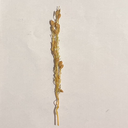
Oryza sativa (circum-Aus1 var. N22) Assembly and Gene Annotation
About Oryza sativa (circum-Aus1 var. N22)
Asian cultivated rice is a staple food for half of the world population. With a genome size of ~390 Mb (n=12), rice has the smallest genome among the domesticated cereals, making it particularly amenable to genomic studies. In 2020, a reanalysis of the population structure analysis showed that rice could be subdivided into a total of 15 subpopulations (XI-1A, XI-1B1, XI-1B2, XI-2B, XI-2A, XI-3B1, XI-3A, XI-3B2, GJ-trop1, GJ-trop2, GJ-subtrp, GJ-tmp, cA2, cA1 and cB) and 4 admixed populations (GJ-adm, XI-adm, admixed and cA-adm). Then 16 rice cultivar varieties were selected based on genetic diversity and origin that could represent the 15 subpopulations and the largest admixed population, i.e. XI-adm. The collection of 16 Platinum Standard RefSeqs (PSRefSeq) can be used as a template to detect virtually all standing natural variation that exists in the pan-genome of cultivated Asian rice. Oryza sativa cv. N22 (collected from: India) is selected as the representative of cA1 subpopulation, in which the accessions are mostly collected from India, Bangladesh and Nepal.
Notes of Subpopulations: cA = circum-Aus; cB = circum-Basmati; GJ= Geng-japonica where trop = tropical, subtrp = subtropical; XI = Xian-indica
More information can be found on the IRRI website.
Picture credit: Keerthana Manickam, Rod Wing, Yong Zhou, KAUST, 2023.
Statistics
Summary
| Assembly | OsN22RS2, INSDC Assembly GCA_001952365.2, Jan 2020 |
| Database version | 116.1 |
| Golden Path Length | 388,175,468 |
| Genebuild by | Gramene |
| Genebuild method | External annotation import |
| Data source | University of Arizona |
Gene counts
| Coding genes | 36,307 |
| Non coding genes | 264 |
| Long non coding genes | 264 |
| Gene transcripts | 44,099 |
![[RSS logo]](/i/rss_icon_16.png "Ensembl blog")
![[twitter logo]](/i/twitter.png "Follow us on Twitter!")
